At ACCP’s April meeting in Reno, the on-site bookstore offered a large selection of books and other educational materials. Attendees were able to purchase titles to enrich their professional libraries and aid in their day-to-day practice. The following are the most popular choices from the recent meeting:
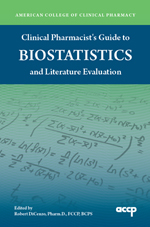
Clinical Pharmacist’s Guide to Biostatistics and Literature Evaluation was developed to bolster the clinical pharmacist’s knowledge and confidence in using biostatistical tools for interpreting the literature. With material drawn from ACCP’s renowned Pharmacotherapy Self-Assessment Program (PSAP) and ACCP’s live preparatory course Updates in Therapeutics®, this review is designed to support the pharmacist’s preparation for the Pharmacotherapy and Ambulatory Care Pharmacy Board of Pharmacy Specialties (BPS) examinations.
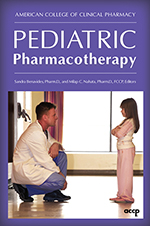
Pediatric Pharmacotherapy. Pharmacy literature has long been without a resource geared toward the unique therapeutic requirements of pediatric patients, but now, ACCP’s newly released Pediatric Pharmacotherapy fills that void by focusing on the therapeutic needs of neonates, infants, children, and adolescents. Developed especially for students and trainees in pediatric pharmacy, this book is useful for practitioners at every level who are involved in pediatric patient care. Pediatric Pharmacotherapy is a necessary addition to the pediatric pharmacy literature.

Pharmacotherapy Flash Cards contains 238 question-and-answer cards to sharpen your therapeutic decision-making skills. These cards provide a complete review of pharmacotherapeutic concepts for the major disease states most often encountered in practice.

Antibiotic Basics for Clinicians is a how-to guide for applying your knowledge of pharmacology and microbiology in order to select the appropriate antibiotic. Rather than rely on rote memorization, you’ll learn the rationale behind the recommended treatment of common infectious diseases and pathogens. The text focuses on antibacterial agents, examining individual antibiotics and antibiotic classes as well as definitive and empiric therapies—providing a framework for prescription and clinical preparation.

Antibiotics Simplified is a succinct guide designed to bridge the knowledge gained in basic science courses with the standards in clinical practice for infectious diseases. This practical text reviews basic microbiology and how to approach the pharmacotherapy of a patient with a presumed infection. It also contains concise Drug Class Reviews, with an explanation of the characteristics of various classes of antibacterial drugs and antifungal drugs.
Johns Hopkins ABX Guide continues to provide current, authoritative, and comprehensive information on antimicrobial agents, infectious diseases, and commonly encountered pathogens in one portable volume. Written by experts at the world-renowned Johns Hopkins University School of Medicine, this guide features expert recommendations, clinical and diagnostic decision-making tools, and drug-to-drug interactions. Concise, thorough, and current, Johns Hopkins ABX Guide is designed for quick reference and comprehension. Information is featured in an easy-to-access format that facilitates the rapid application of knowledge at the point of care.

Top 100 Drug Interactions. This popular pocket-sized reference book contains information on more than 6800 individual, clinically significant drug interactions, each of which is grouped by object and precipitant drugs. The table listing CYP and transporter substrates and modifiers includes in excess of 400 drugs and, unlike other sources, includes only data substantiated by human in vivo studies. Each drug interaction description includes a brief summary of the interaction. Top 100 Drug Interactions provides clear management options, allowing you to select an appropriate way to avoid potential adverse effects.

Drug Information Handbook continues the tradition of delivering trusted pharmacotherapy knowledge to health care professionals. This resource follows a user-friendly, dictionary-like format, providing clinicians with fast access to clear and concise drug information. Drug Information Handbook covers more than 5500 medications. Each monograph encompasses up to 39 fields of information, including detailed content on dosage, drug interactions, and adverse reactions. Supplementing the drug information is a comprehensive appendix offering charts, tables, treatment guidelines and therapy recommendations, and a Pharmacologic Category Index that lists all drugs within their unique pharmacologic class.
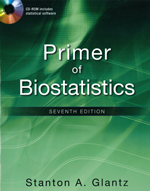
Primer of Biostatistics is a concise, engaging introduction to understanding statistics as they apply to medicine and the life sciences. This primer demystifies this challenging topic in an interesting and enjoyable manner that assumes no previous knowledge of the subject. You will be able to understand test selection and evaluate biomedical statistics critically, knowledgeably, and confidently.

Basic Skills in Interpreting Laboratory Data is the only reference on this subject written by pharmacists for pharmacists. Students find this guide a clear and useful introduction to the fundamentals of interpreting laboratory test results. Practitioners value its help in assessing patient responses to drug treatment.
You can purchase these titles for your collection as well. Simply visit the ACCP online bookstore to order your favorites today.