Bradley Boucher, Pharm.D., FCCP, BCPS; Barry Carter, Pharm.D., FCCP, BCPS; and Mary H.H. Ensom, Pharm.D., FCCP, have been selected by the College’s Awards Committee to receive the association’s prestigious 2011 Clinical Practice, Therapeutic Frontiers Lecture, and Education Awards, respectively. In addition, Dr. Carter will receive the 2011 Russell R. Miller Award. The awards will be presented in Pittsburgh, Pennsylvania, on Sunday morning, October 16, during the Opening General Session of the College’s 2011 Annual Meeting.
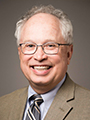
The ACCP Clinical Practice Award is given to a College member who has made substantial and outstanding contributions to clinical pharmacy practice. The criteria considered in identifying potential candidates include exceptional leadership in the development of innovative clinical pharmacy services and sustained excellence in providing them. Bradley Boucher is professor of clinical pharmacy and associate professor of neurosurgery at the University of Tennessee Health Science Center. He practices in the area of critical care at the Regional Medical Center at Memphis. In recommending Dr. Boucher, Dr. G. Christopher Wood, a long-time colleague, wrote in his letter of nomination,
Dr. Boucher has practiced as a clinical pharmacist in the level one trauma center at the Medical Center since 1984. He was the first pharmacotherapy clinical pharmacist at the trauma center, which opened in 1983. Thus, he created this practice. The trauma ICU has grown over time to have 23 dedicated trauma ICU beds and 8 step-down beds and is now the third busiest in the country. From 1984 to 2000, Dr. Boucher provided 12 months of clinical coverage per year as a tenure-track faculty member. In addition to creating this clinical service, he developed an independent clinical research program, a critical care/nutrition support residency, and a critical care fellowship; he was promoted to full professor and served ACCP and UT in myriad capacities during this period. It is simply a staggering achievement that he was able to provide 12 months of true clinical service per year as a tenure-track faculty member during this time and be so successful in the other aspects of his career.
Dr. Curtis Haas, director of pharmacy at the University of Rochester Medical Center’s Strong Memorial Hospital in Rochester, New York, wrote in his letter of support,
His clinical practice has created a learning laboratory for students, residents, and fellows over the past 25 years. During this period, Brad has trained roughly 50 residents and fellows, and hundreds of students. In addition, his research grants and peer-reviewed publications clearly reflect the translational nature of Brad’s career. That is, his observations and inquiry from ICU clinical practice have been the inspiration for his research interests and ideas. In fact, I believe a review of his research and publication history reflects the changes and maturation of his clinical practice over the 26 years in the ICU.
Dr. Boucher has contributed regularly to the medical and pharmacy literature and has delivered many presentations at scientific and professional meetings focusing on critical care pharmacotherapy and other intensive care–related subjects. As a current ACCP fellow and a past president and treasurer of ACCP, he has provided significant leadership within the College and the profession.

The ACCP Therapeutic Frontiers Lecture Award recognizes an individual, including ACCP member and nonmember nominees, who has made outstanding contributions to pharmacotherapeutics in his or her field. Among the criteria for this award is the broad acknowledgment that the recipient’s contributions are considered at the leading edge of current research in the field. Barry L. Carter, Pharm.D., FCCP, FAHA, FASH, is the Patrick E. Keefe Professor of Pharmacy in the Department of Pharmacy Practice and Science, College of Pharmacy, and a professor and associate head for research, Department of Family Medicine, in the Roy J. and Lucille A. Carver College of Medicine at the University of Iowa. He is known internationally for his sustained work in the pharmacotherapy of hypertension. Dr. Stuart Haines, professor and pharmacotherapy specialist at the University of Maryland, wrote in his letter of support for Dr. Carter’s nomination,
Dr. Carter has an impressive scholarly record with hundreds of peer-reviewed papers and research presentations. He has been the principal faculty mentor for nearly a dozen Ambulatory Care and Family Medicine Research Fellows—whose collective works have significantly influenced the practice of ambulatory care pharmacy and the treatment of hypertension. His record of grant funding is impeccable—having secured more than 10 million dollars to examine models of care and the therapeutic use of antihypertensive drugs. Previous recipients of the ACCP Therapeutic Frontiers [Lecture] Award have typically been clinical-translational scientists who have investigated the pharmacokinetics, pharmacodynamics, and (more recently) pharmacogenomics of drugs. Dr. Carter, on the other hand, is examining the systems of care through which medications are used. While the response to medications is partially explained by the inherent properties of drugs within biological systems, the system of care and therapeutic relationships through which medications are delivered are perhaps the most important ingredients for achieving optimal patient outcomes. It is this therapeutic frontier—understanding how to best deliver care and capitalize on the relationships between pharmacists, patients, and prescribers—that Dr. Carter and his colleagues are exploring.
Dr. Allen Shaughnessy, professor of family medicine at Tufts University School of Medicine, noted in his letter nominating Dr. Carter for this award,
It is his sustained research work in the pharmacotherapy of hypertension that qualifies Dr. Carter for recognition… Because of this work, he has been recognized as a leader in hypertension pharmacotherapy and has been a member of the National Heart, Blood, and Lung Institute of the National Institutes of Health. Over the past 20 years, he has been a member of the last 4 Joint National Committees that have produced highly lauded national guidelines on the detection, evaluation, and treatment of high blood pressure… To me, it is Barry’s sustained contribution to our understanding of hypertension pharmacotherapy, along with his research into optimal management of patients, that makes him a worthy recipient of this recognition…. His research has extended beyond simply the pharmacology of treatment and into the pharmacotherapy of individuals with hypertension. This application of the best pharmacotherapy for the treatment of individuals is the goal of most members of the College.
Dr. Carter’s lecture, titled “Therapeutic Frontiers in Health Services Research: Methods and Intervention Models,” will be delivered at 10:30 a.m. during Sunday’s Opening General Session.
Of note, Dr. Carter will also receive the 2011 Russell R. Miller Award during the Annual Meeting’s Opening General Session. Dr. Miller was the founding editor of the College’s journal, Pharmacotherapy. The Russell R. Miller Award is presented in recognition of substantial contributions to the literature of clinical pharmacy, thereby advancing both clinical pharmacy practice and rational pharmacotherapy. Dr. Carter will receive this award for his many significant contributions to the literature focusing on the treatment of hypertension.

The Education Award recognizes an ACCP member who has made substantial and outstanding contributions to clinical pharmacy education at either the undergraduate or the postgraduate level. Mary H.H. Ensom (formerly Chandler) is professor and director of the Doctor of Pharmacy Program, Faculty of Pharmaceutical Sciences, and Distinguished University Scholar, University of British Columbia, and clinical pharmacy specialist, Children’s & Women’s Health Centre of British Columbia. Dr. Ensom’s main areas of expertise are clinical pharmacokinetics and pharmacodynamics. Letters written by colleagues in support of Dr. Ensom’s nomination speak to her passion for teaching pharmacokinetics and her commitment to the learning of others. Dr. Samuel Poloyac, associate professor of pharmaceutical sciences at the University of Pittsburgh School of Pharmacy, wrote in his letter of support,
Mary’s teaching style is very effective. She uses a strong theoretical understanding of pharmacokinetic concepts to teach the clinical application in patients. There are few faculty who are capable of teaching both the fundamental theories, such as equation derivations for the well-stirred model, and also teach the bedside application of these concepts based on the patient’s condition. Mary is one such individual. She is able to span the gaps of theoretical through application in such a way that students are engaged and interactive within the classroom. More importantly, since Mary teaches from the theoretical foundation, students are able to retain the material well beyond the classroom and throughout their professional careers.
Sheri L. Koshman, Pharm.D., BSPharm, assistant professor in the Division of Cardiology at the University of Alberta and a former student at the University of British Columbia, added in her letter regarding Dr. Ensom’s nomination,
Dr. Ensom has a passion for teaching pharmacokinetics. I have never met anyone more passionate about pharmacokinetics than her. Her passion and commitment to the topic, made me and my classmates actively engaged in the topic. She made the topics practical and gave us tools to use in our daily practice… Dr. Ensom was always very supportive and empathetic during our intensive training. When we were down and pondering why we quit our jobs to go back to school, she would remind us how special and skilled we were to be there. She reminded us that it takes works to become better… Finally, Dr. Ensom also shared that she learns each of her students’ names and faces prior to each lecture in an attempt to connect with them and make them feel important (even in undergraduate classes that have over 120 students). In an attempt to mimic this technique (although not hardly as successful in terms of my power of memory), I have found that being able to recognize students and address them by their first names really engages them and makes them more likely to ask me questions. Hence, I can facilitate their learning better.
In addition to being recognized as an exemplary educator, Dr. Ensom has more than 420 publications (including 180 articles in national and international peer-reviewed journals and 11 book chapters) to her credit, and she received the ACCP Russell R. Miller Award in 2006. She serves as editor for the Canadian Journal of Hospital Pharmacy and is a member of the editorial boards of five other international journals. She is a fellow of ACCP and one of only eight pharmacists who are fellows of the Canadian Academy of Health Sciences, Canada’s equivalent to the Institute of Medicine.