Joseph Dasta, Robert Page II, Marc Pfeffer, and Stephanie Phelps have been selected by the College’s Awards Committee to receive the association’s prestigious 2013 Russell R. Miller, Clinical Practice, Therapeutic Frontiers Lecture, and Education awards, respectively. The awards will be presented in Albuquerque, New Mexico, on Sunday morning, October 13, during the Opening General Session of the College’s 2013 Annual Meeting.
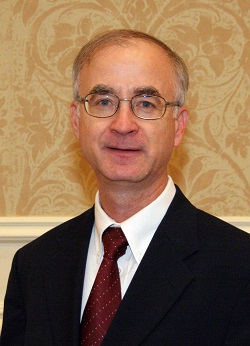
Russell R. Miller was the founding editor of the College’s journal, Pharmacotherapy. The Russell R. Miller Award is presented in recognition of substantial contributions to the literature of clinical pharmacy, thereby advancing both clinical pharmacy practice and rational pharmacotherapy. Joseph F. Dasta, M.S., FCCP, is professor emeritus at The Ohio State University College of Pharmacy and an adjunct professor at the University of Texas College of Pharmacy. Professor Dasta is widely regarded as one of the pioneers of critical care pharmacy practice. At the time of his nomination, he had written more than 120 peer-reviewed papers, 85 abstracts, and 58 brief communications and had contributed to more than 18 textbooks on critical care pharmacotherapy. In 1999, the Society of Critical Care Medicine (SCCM) approved the Joseph F. Dasta Critical Care Pharmacy Outcomes Research Grant to support the research of critical care clinical pharmacists. In her letter supporting this nomination, Dr. Sandra Kane-Gill focused on the significance of Professor Dasta’s scholarly contributions to the early development of critical care pharmacy practice:
His early work centered on pharmacotherapeutic practice patterns and developing the pharmacist’s role in critically ill patients. This work was one of the first attempts to understand ICU pharmacotherapy, describe alterations in pharmacokinetics during critical illness, and document the suboptimal use of sedatives. Joe emphasized that data from studies conducted on ward patients often do not apply to acutely injured patients.
In his letter of nomination, Dr. Christopher Paciullo from Emory University Hospital noted Professor Dasta’s impact on critical care pharmacy:
Professor Dasta’s “family tree” has likely led to the publication of hundreds (even thousands) more articles, abstracts and texts on critical care pharmacotherapy. His trainees have gone on to become leaders in the field and contributed a large body of work to the critical care literature, as have their trainees and mentees.
Finally, Dr. Kane-Gill commented on how Professor Dasta’s publications have paved the way for critical care clinical pharmacists,
His 1982 editorial on critical care therapeutics was the first paper to identify the ICU as an important area for pharmacist contributions and was followed by the first textbook on “The Practice of Critical Care Pharmacy” in 1985, which he co-edited. This helped set the stage for the increasing role of the critical care pharmacist. The studies he conducted in ICU patients demonstrated the additional role a pharmacist can play in conducting critical care research.
Professor Dasta has served on the editorial boards of Critical Care Medicine and The Annals of Pharmacotherapy and as a member and author on numerous SCCM guidelines management committees. He was recognized as a fellow in ACCP in 1988 and as a fellow of the American College of Critical Care Medicine in 1990.

The ACCP Clinical Practice Award is given to a College member who has made substantial and outstanding contributions to clinical pharmacy practice. The criteria considered in identifying potential candidates include exceptional leadership in developing innovative clinical pharmacy services and sustained excellence in providing them. Robert Lee Page II, Pharm.D., MSPH, FCCP, FAHA, FASHP, FASCP, BCPS, CGP, is an associate professor of clinical pharmacy at the University of Colorado Skaggs School of Pharmacy and Pharmaceutical Sciences and an associate professor of physical medicine and rehabilitation at the University of Colorado School of Medicine. As a clinician, Dr. Page has led the development of innovative clinical pharmacy services to patients with heart failure and heart transplant patients, and documented the impact of these services on patient outcomes. He is the author of more than 150 publications, including peer-reviewed papers, book chapters, and abstracts. In nominating Dr. Page for the Clinical Practice Award, Dr. Samuel Johnson wrote in his letter of nomination,
Dr. Page’s dedication, passion, and influence for clinical pharmacy practice are quite evident. He has implemented several innovative clinical pharmacy services and roles, including an integrated inpatient and outpatient heart failure and cardiac transplant clinical service at the University of Colorado Hospital and participation on the hospital’s multidisciplinary organ transplant selection committee—well before CMS required that pharmacists be involved. He has documented the major impact of these clinical pharmacy services on health and economic outcomes in respected, peer-reviewed journals including Pharmacotherapy, Journal of Cardiac Failure, and Circulation. Dr. Page’s participation in numerous advocacy efforts for clinical pharmacy within the American Heart Association, the American College of Cardiology, and the International Society for Heart and Lung Transplant have helped raise awareness of the beneficial impact of clinic al pharmacy practice on public health.
Dr. Jean Nappi, professor of clinical pharmacy and outcomes sciences at the South Carolina College of Pharmacy and one of Dr. Page’s early mentors, wrote in her letter of support,
I think one of the most striking characteristics of Robert is his love to learn and correspondingly to share what he has learned. As a student and resident he took every opportunity to broaden his knowledge. He chose a pharmacotherapy residency (which was a very new concept at the time) because he had a strong desire to help manage patients with a broad and complex range of problems. He mastered every disease, drug class and skill we challenged him with. . . . It is noteworthy that Robert blends his practice with scholarship. He has gone from being an extremely competent clinician to a very productive clinician scientist. He has made major contributions to the body of knowledge, particularly in the areas of cardiac transplantation and heart failure. Many of his publications are in the very top medical journals. Dr. Page has furthered his education in epidemiology and health services research. He is now playing a major role in the Colorado Medicaid Drug Utilization Review Program influencing the care of thousands of patients through the selection of the most cost-effective medications available.
Dr. Page’s recognition as a scholar has resulted in his service as an editorial board member for many journals, including JACC-Heart Failure, Journal of Clinical Toxicology, European Medical Journal-Cardiology, and The Consultant Pharmacist, and as a reviewer for numerous medical and scientific journals, including Pharmacotherapy. In recognition of his skill as a clinical educator, he has received several teaching awards, including the University of Colorado Health Sciences Center Chancellor’s Teaching Award.
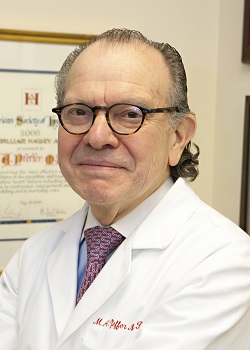
The ACCP Therapeutic Frontiers Lecture Award recognizes an individual, including ACCP member and nonmember nominees, who has made outstanding contributions to pharmacotherapeutics in his or her field. Among the criteria for this award is the broad acknowledgment that the recipient is currently considered at the leading edge of research in the field. Marc A. Pfeffer, M.D., Ph.D., is the Victor J. Dzau Professor of Medicine at Harvard Medical School in Boston, Massachusetts. He has distinguished himself as a translational scientist and leader of international randomized clinical trials. Dr. Pfeffer, working with his late wife, Dr. Janice Pfeffer, and renowned cardiologist Eugene Braunwald, is credited with introducing the concept of an insidious deleterious structural remodeling of the impaired left ventricle, recognizing that this adverse remodeling leads to a reduction in ventricular performance and heart failure. He showed in animals and then in human pilot studies that use of an angiotensin-converting enzyme (ACE) inhibitor could attenuate these adverse longitudinal structural and functional changes. Dr. Pfeffer’s nominator, Dr. Orly Vardeny from the University of Wisconsin School of Pharmacy, called attention to the significance of his work:
Dr. Pfeffer led the first definitive clinical trial in patients with myocardial infarction (Survival And Ventricular Enlargement, SAVE) that demonstrated survival and the prevention of heart failure could be achieved with the use of ACE inhibitors. This landmark study led to the adoption of ACE inhibitors as standard of care for patients with myocardial infarction complicated by heart failure or ventricular dysfunction. From these bench-to-bedside discoveries, the prognosis of untold numbers of survivors of myocardial infarction has been definitively improved. Dr. Pfeffer has subsequently led several international clinical trials that have focused on inhibiting the renin angiotensin system in post-MI and heart failure patients, and has extended the findings of SAVE to other classes such as angiotensin receptor blockers.
Dr. Judy Cheng, professor of pharmacy practice at Massachusetts College of Pharmacy and Health Sciences and a colleague of Dr. Pfeffer’s at Brigham and Women’s Hospital in Boston, wrote in her letter of support,
In more recent years, Dr. Pfeffer has continued his research in the understanding of the use of pharmacotherapy to modify the renin-angiotensin-aldosterone system in patients with heart disease, specifically those who have heart failure or who are post-myocardial infarction. The “Valsartan, captopril or both in myocardial infarction complicated by heart failure, left ventricular dysfunction, or both (VALIANT)” study published in [The] New England Journal of Medicine in 2003 established that angiotensin receptor blocker can be used as an alternative to ACE inhibitors in patients who cannot tolerate ACE inhibitors for a specific reason, or in combination with ACE inhibitors to further improve outcomes. His current ongoing research of a new renin inhibitor, Aliskiren in post-myocardial infarction patients (the ASPIRE study) and spironolactone in heart failure patients with preserved ejection fraction (the TOPCAT study), help complete our understanding of the use of other pharmacologic agents that affect the renin-angiotensin-aldosterone system in this patient population.
An internationally recognized expert in the field of cardiology, Dr. Pfeffer was honored in 2006 by Science Watch as having the most highly cited original papers in all of clinical medicine. He is the recipient of the William Harvey Award of the American Society of Hypertension, the Okamoto Award from Japan’s Vascular Disease Research Foundation, and the Clinical Research Prize of the American Heart Association. He is credited with publishing more than 350 peer-reviewed original reports and another 175 reviews, book chapters, or editorials. Dr. Pfeffer’s lecture, titled “Surprising Findings from Clinical Trials,” will be delivered at 10:30 a.m. during the October 13 Opening General Session in Albuquerque.
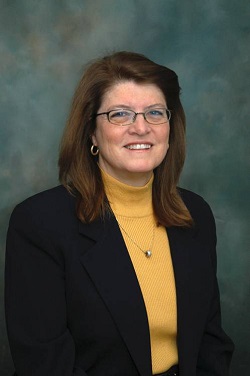
The Education Award recognizes an ACCP member who has made substantial and outstanding contributions to clinical pharmacy education at either the undergraduate or the postgraduate level. Stephanie J. Phelps, Pharm.D., FCCP, FAPhA, BCPS, is associate dean for academic affairs and professor of clinical pharmacy at the University of Tennessee College of Pharmacy as well as professor of pediatrics at the University of Tennessee College of Medicine. Letters written by colleagues in support of Dr. Phelps’ nomination speak to her passion and commitment to education. Dr. P. David Rodgers, associate dean for translational research at the University of Tennessee College of Pharmacy, wrote in his letter of support:
Dr. Phelps is the embodiment of academic excellence and expects nothing less from those around her, including her students, trainees, and peers. I have experienced this expectation firsthand on multiple levels during my time as a student and resident and continue to be impressed with her passion and determination to continually improve the educational offerings of not only our Pharm.D. curriculum, but also our postdoctoral training programs . . .
Dr. Richard Helms, professor and chair of the University of Tennessee’s Department of Clinical Pharmacy, commented on Dr. Phelps’ ability to actively involve her students in learning:
She has always strived to engage students in active practice roles during their experiential education. It is not sufficient to “watch” and learn; it only has meaning, and stimulates retention, if one “does” while learning. She always has her students probing dogma: what do we really know? Are our assumptions valid? How should the approach to care be changed to reflect this new understanding? How can students be involved to improve compliance, safety, and outcomes? Dr. Phelps has never viewed students as liabilities, but as extenders of care. Students become engaged and excited, launching into practice with enthusiasm and real capability.
Dr. Milap Nahata, professor and chair of the Division of Pharmacy Practice and Administration at The Ohio State University College of Pharmacy and a past ACCP president, noted in his letter of support,
An essential component of being an excellent educator is to make important contributions to the literature. Dr. Phelps has done this by authoring or coauthoring 65 peer-reviewed articles and numerous book chapters which are read by a large number of pharmacy students, trainees, and practitioners. . . . A well-rounded educator is expected to provide professional service as well. Dr. Phelps has served in the elected offices of organizations including AACP, APhA, ASHP, and ASPEN. She has also served on the editorial boards of several journals . . . and as the Editor-in-Chief of the [The] Journal of Pediatric Pharmacology and Therapeutics for the past 10 years.
Dr. Phelps’ expertise is recognized internationally as well. She has been invited to lecture in Germany; Vancouver, British Columbia; and Riyadh, Saudi Arabia. The textbook on which she serves as lead editor, titled Guidelines for Administration of Intravenous Medications to Pediatric Patients (known as “The Teddy Bear Book”), is now in its 10th edition.