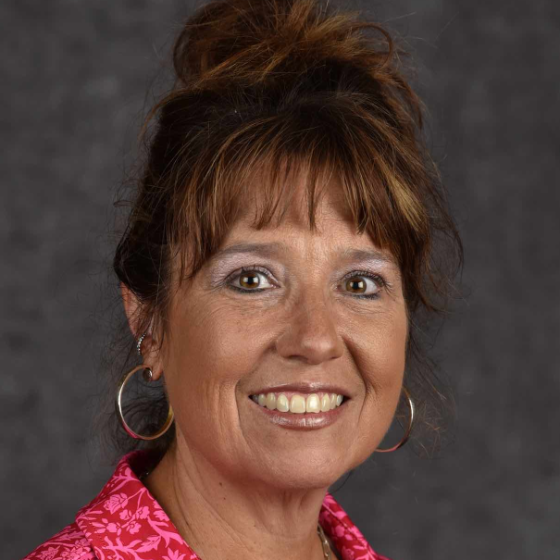
 Rhoney
“Staring at the blank page before you…”1: this lyric echoed through the ballroom as I stepped onto the stage for the Incoming President’s Address at this year’s Annual Meeting. I chose Unwritten, not because it is a song about beginning but because it is a song about authorship. It reminds us that no one else can speak the words on our lips, and if clinical pharmacy is to shape the next era of health care, we cannot wait for someone else to narrate our value.
This year’s presidential theme, “Unwritten: Preventing Medication Harm Is Our Story to Write,” is not a slogan. It is a call to claim the story that has always been ours, but never fully told: Clinical pharmacists prevent medication harm in ways no other health care professional can. Yet we have never unified around this identity, and the world still does not understand what is at stake when our work is absent.
If we want the public to see us differently, we must speak differently—not only about what we optimize but also about what we prevent.
A Reckoning in Medication Harm
In 2017, the World Health Organization launched its global challenge, Medication Without Harm, setting an ambitious goal: reduce severe, avoidable medication harm by 50% in 5 years. That deadline has passed. Not only did we fail to reach it, but the problem has grown.2,3
- 1.3 million Americans experience medication-related harm every year.
- The United States spends $37.6 to $50 billion annually on preventable medication harm.
- 1.5 million ED visits and 500,000 hospitalizations occur each year because of medication-related harm.
- 53% of severe harm occurs at the prescribing stage, before a dose is ever given.
- 36% occurs at dispensing and administration, often because of system complexity.
- Adults 65 and older experience twice the rate of ED visits as younger adults for medication harm.
- 1 in 4 cases is life threatening.
We often speak of medication safety as if harm were only the result of an error. But patients experience harm in many forms3:
- Cost-related nonadherence
- Confusing or conflicting instructions
- Polypharmacy without deprescribing
- Lack of culturally relevant communication
- Transitions of care without reconciliation
- Inequitable access to the right medication, at the right time, in the right way
Unwarranted medication harm is bigger than safety. It includes access, understanding, equity, monitoring, affordability, and trust. This is the full landscape where clinical pharmacists prevent harm and where our story must now be told.
The Promise We Now Must Keep
At this year’s Annual Meeting, keynote speaker Alex Sheen, founder of Because I Said I Would,4 reminded us that a promise is not about intention; it is about identity. A promise says, “This is who I am, even when it is difficult, inconvenient, or unseen.”
Every time we counsel a patient, reconcile a list, prevent an interaction, talk to an interprofessional team member, challenge a dose, stop an unsafe order, or redesign a care process, we are keeping a promise that patients don’t even know we made: “Your medicines will help you, not harm you.”
Sheen discussed a truth that stayed with many of us: “The world does not need more awareness. It needs more people who follow through.” That is us. That has always been us. But we have not told the story of our follow-through loudly enough, publicly enough, or collectively enough.
Why Storytelling Matters Now
Data will always matter, but numbers alone do not move hearts, budgets, legislators, or systems. Stories do. In Academic Medicine, Editor-in-Chief Laura Weiss Roberts writes that storytelling causes us “to feel, observe, remember, and learn” and clarifies “what matters and what has brought us to the field.”5 The same is true for our profession. Optimization sounds technical; preventing harm sounds human. Optimization is a task; preventing harm is a purpose. Optimization explains what we do. Preventing harm explains why it matters.
When we lead with harm prevention, we shift from offering “nice-to-have” services to providing “must-have” services; from being “medication experts” to serving as “harm reduction specialists”—from delivering another clinical service to fulfilling an irreplaceable patient safety function. Storytelling doesn’t replace science—it translates it.
A Year of Action—and What I Need from You
“No one else can feel it for you / Only you can let it in.”1 This lyric applies not only to personal growth, but also to professional voice. This year is not about what I will do as president. It is about what we will write together—as a profession, as a community, and as leaders in preventing medication harm. So, here is my ask of every ACCP member:
Tell one story about how you prevented medication harm, and don’t keep it to yourself.
- A harm avoided
- A patient protected
- A system redesigned
- A medication stopped in time
- A policy changed
- A research finding that reveals harm we can now prevent
- An educational initiative that shaped the next generation of harm prevention specialists
- A moment when someone finally realized, This is why clinical pharmacists are essential
Your story may feel ordinary to you—but it is anything but ordinary to the person whose life, safety, or dignity was protected because of your actions, or to the learner who will now do the same for someone else. So, share it:
- In your PRN
- In your clinic, laboratory, classroom, or rounds
- In a poster, manuscript, infographic, podcast, or statewide testimony
- With a policymaker who still thinks pharmacists “just verify orders”
- With a patient advisory council
- With a student or resident who is still searching for their “why”
- On a public platform, use hashtags such as #PreventingHarm so that the story is louder than the silence
And yes—share it with me, too. I will highlight member stories this year in my columns, keynotes, and ACCP communications. Because storytelling is not decoration, it is strategy. Because no one else can speak the words on our lips. Because harm is being done every day in silence. Because the next chapter of clinical pharmacy will be written by the storytellers—or not at all.
“Today is where your book begins / The rest is still unwritten.”1 Let’s write it loudly, visibly, and together.
References
- Bedingfield N. Unwritten [song]. On: Unwritten. Phonogenic/Epic Records; 2004.
- Centers for Disease Control and Prevention. 2019 annual surveillance report of drug-related risks and outcomes—United States Surveillance Special Report. Published November 1, 2019. Centers for Disease Control and Prevention, US Department of Health and Human Services; 2020. Accessed November 6, 2025. https://www.cdc.gov/drugoverdose/pdf/pubs/2019-cdc-drug-surveillance-report.pdf
- World Health Organization. Medication without harm: global patient safety challenge. World Health Organization; 2017. Accessed November 3, 2025. https://www.who.int/initiatives/medication-without-harm
- Because I Said I Would [homepage on the internet]. Accessed November 3, 2025. https://becauseisaidiwould.org
- Roberts LW. Why storytelling in medicine matters. Acad Med. 2024;99(12):1317-1318. https://doi.org/10.1097/ACM.0000000000005879