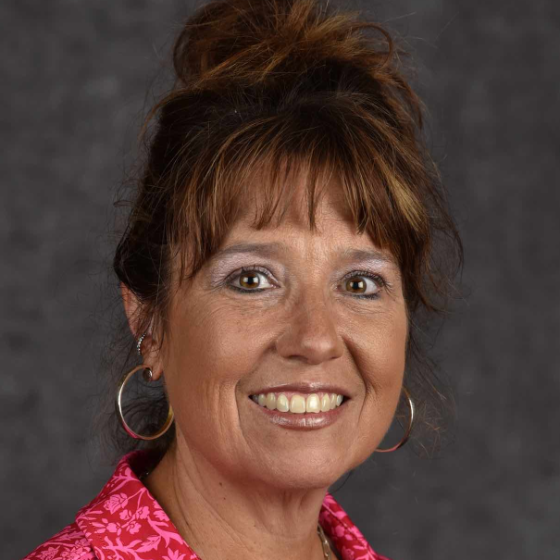
 Rhoney
The future of clinical pharmacy is unwritten.
Its next chapters are shaped by people who notice what others may overlook, question what has become routine, and remain willing to follow the evidence even when it leads somewhere unexpected.
This is the spirit of the Therapeutic Frontiers Lecture Award. This year, ACCP will recognize 2026 Therapeutic Frontiers Lecturer John W. Devlin, Pharm.D., FCCP, MCCP, BCCCP, whose sustained and collaborative scholarship has helped transform how clinicians understand delirium in critically ill adults.
Delirium can be frightening for patients and families and challenging for ICU clinicians to recognize amid fluctuating critical illness, particularly in patients who are nonverbal or sedated or who have underlying neurologic conditions. For many years, patients with delirium were assumed to have “ICU psychosis” and often treated with high-dose haloperidol despite a lack of evidence supporting its routine use.
John’s research program helped change that story.
I have had the pleasure of working with John since early in his career, when our paths crossed in Detroit. I watched with great admiration as he carried those early clinical questions with him to Boston and built a research program that has flourished through collaboration, persistence, and an unwavering focus on improving the experience and outcomes of critically ill patients. To see the questions that began at the bedside grow into work that has helped reshape critical care practice has been especially meaningful to me.
Making the Invisible Visible
A meaningful frontier often begins not with a treatment, but with learning to see the problem clearly.
Early in his work, John and his collaborators, who have almost always included pharmacy fellows and graduate students, identified barriers to ICU delirium recognition and examined how education and validated assessment tools could improve bedside detection. Their work demonstrated that rigorous delirium recognition could be taught, strengthened, and incorporated into the routine bedside care delivered by the ICU interprofessional team.1
The impact was larger than any single screening instrument. Delirium became something ICU teams could name, discuss, measure, and study. Once it was visible, new questions became possible: What places a patient at risk? How do medications and patterns of sedation influence brain function? What are the ICU and post-ICU sequelae of delirium? Which interventions prevent delirium? Which treatments improve outcomes that matter to patients and families?
John remembers the clinical environment that made these questions increasingly difficult to ignore:
In the early 2000s, I shared the concerns of other clinicians that patients were often deeply sedated, frequently administered continuous benzodiazepines and rarely left their bed until extubated. Family expressed concern about their inability to interact with their loved ones.
At the time, he notes, “the concept of ICU survivorship was still novel.” Instead, “daily ICU decision-making focused largely on surviving the ICU rather than on post-ICU psychological health or cognitive and physical function, and few of the pharmacologic agents used to manage pain, agitation, and delirium had been rigorously evaluated in controlled trials.”
These observations helped define a much larger question: not simply whether critically ill patients survived, but also what happened to their brains, functionality, and recovery along the way.
Following the Evidence, Not Preferred Answers
What I find most inspiring about John’s work is not that it offers one simple solution. It is that his research reflects the discipline to keep asking better questions. His team tested promising pharmacologic approaches to treat and prevent delirium, including quetiapine and dexmedetomidine. In an early double-blind, randomized controlled trial (RCT) evaluating an antipsychotic to treat ICU delirium, quetiapine reduced the duration of delirium.2 In another RCT, nocturnal dexmedetomidine reduced incident ICU delirium by 44%,3 although when dexmedetomidine was compared with propofol for ICU sedation, it did not reduce delirium or improve post-ICU cognition.4
John also collaborated on studies examining medication-associated risk factors for delirium and the relationships among sedation, sleep, pain, and delirium.5,6 Across this body of work, the question steadily expanded from “Which drug should we use to prevent and treat delirium?” to “How does the entire ICU experience affect the patient’s brain, functionality, and recovery?”
One of the clearest expressions of this shift came through the multicomponent ICU Liberation, or ABCDEF, bundle. John describes this work as a career high point:
A highlight of my career was working with an interprofessional group of ICU researchers to refine the multicomponent ICU Liberation (ABCDEF) bundle and rigorously implement it in 68 diverse US ICUs having a pharmacist rounding with the team. The evaluation included more than 15,000 patients. Greater use of the bundle was associated with a 68% reduction in ICU mortality, a 40% reduction in ICU delirium, and a 64% reduction in discharge to another institution rather than home.7
This work reinforced something increasingly important in delirium care—that the answer was unlikely to reside in a single drug. It required thinking about the entire environment of critical illness and the many modifiable factors that shape a patient’s experience.
Just as importantly, John’s scholarship illustrates the humility required of good science. Promising findings invite larger and better studies; familiar practices still require evidence; and a negative trial can advance care by showing clinicians what an intervention does not accomplish. In 2 randomized trials, for example, he found that haloperidol neither prevents nor effectively treats ICU delirium.8,9 The EuRIDICE trial similarly did not support scheduled haloperidol as a treatment that reduces the burden of delirium itself.9
This result is not an absence of progress. It is progress through greater clarity.
This is a lesson for all of us in clinical pharmacy. Our responsibility is not to defend what is customary. It is to examine what the evidence supports, recognize what remains uncertain, and keep the patient’s experience at the center of the question.
Turning Research into a Framework for Care
John’s influence extends well beyond individual studies.
As chair of the Society of Critical Care Medicine panel that developed the 2018 PADIS guidelines, he helped bring pain, agitation and sedation, delirium, immobility, and sleep disruption into 1 integrated framework for adult ICU care.10
This organization mattered. It encouraged clinicians to move beyond viewing delirium as an isolated symptom or searching for a single medication to solve it. Instead, it placed cognition within the entire patient experience: comfort, wakefulness, medication exposure, mobility, sleep, communication, and recovery.
It also reflects the distinctive contribution of clinical pharmacists. We practice at the intersection of pharmacology, physiology, evidence, and implementation. We are positioned to notice when a medication intended to help may also introduce risk, when a routine practice deserves a closer look, and when an evidence-based recommendation must be translated into the realities of individualized bedside care.
The deepest impact of a research program is not captured solely by publications, citations, or grants. It can also be seen in the questions that clinicians now consider essential, the practices that have changed, the language that teams share, and the investigators who are prepared to carry the work forward.
Writing the Questions That Come Next
John continues to help shape this future through his mentorship of early-stage investigators and his leadership with the NIA-funded Network for Investigation of Delirium: Unifying Scientists, or NIDUS.
A recent NIDUS-led roadmap for delirium treatment trials emphasizes that future progress will depend not only on testing new interventions, but also on asking more precise and patient-centered questions: Who should be enrolled? Which manifestation of delirium is the intervention intended to change? Which short- and long-term outcomes matter most? How should trials account for the complexity and rapid change that define critical illness?11
Sometimes the next breakthrough begins with a new therapy. Sometimes it begins with a better measure, a more meaningful outcome, or a study designed around what patients and families most need to recover.
John sees an expansive research frontier ahead. “The heterogeneity of delirium demands precision approaches to target effective treatments”:
Pragmatic and adaptive trial designs; the use of artificial intelligence and biomarkers, including digital, imaging, EEG, and -omics approaches, to predict and recognize delirium; a better understanding of how social determinants of health, comorbidities, and medications influence delirium and long-term cognition; and stronger dissemination and implementation science focused on delirium reduction.
Moreover, he sees a particular opportunity for our profession in writing this next chapter: “Pharmacist-clinician scientists are well-suited to lead these important investigative efforts.”
An Invitation to the Frontier
This is why John’s story belongs within our Unwritten theme.
His career demonstrates that a frontier is advanced by curiosity disciplined by evidence, persistence balanced by humility, and collaboration that makes room for others to continue the work.
It begins by noticing what is being missed.
It moves forward by learning how to measure it.
It requires testing ideas without becoming attached to the result.
And it endures by mentoring others to ask questions we have not yet imagined.
I hope you will join us Sunday, October 18, at the Salt Palace Convention Center in Room 151 D-G at 8:15 a.m. (MDT) for the ACCP Awards Ceremony and Dr Devlin’s Therapeutic Frontiers Lecture.
Come not only to celebrate an extraordinary contribution to critical care pharmacotherapy but also to consider your own unwritten question. The next frontier in clinical pharmacy may begin with something one of us notices, challenges, or understands differently because we were there to hear John’s story.
The future is unwritten. And sometimes, the first line of the next chapter is simply a question someone is willing to follow.
References
1. Devlin JW, Marquis F, Riker RR, et al. Combined didactic and scenario-based education improves the ability of intensive care unit staff to recognize delirium at the bedside. Crit Care. 2008;12(1):R19. https://doi.org/10.1186/cc6793
2. Devlin JW, Roberts RJ, Fong JJ, et al. Efficacy and safety of quetiapine in critically ill patients with delirium: a prospective, multicenter, randomized, double-blind, placebo-controlled pilot study. Crit Care Med. 2010;38(2):419-427. https://doi.org/10.1097/CCM.0b013e3181b9e302
3. Skrobik Y, Duprey MS, Hill NS, Devlin JW. Low-dose nocturnal dexmedetomidine prevents ICU delirium: a randomized, placebo-controlled trial. Am J Respir Crit Care Med. 2018;197(9):1147-1156. https://doi.org/10.1164/rccm.201710-1995OC
4. Hughes C, Mailloux P, Devlin JW, et al. Dexmedetomidine vs. propofol for sedation in mechanically ventilated adults with sepsis. N Engl J Med. 2021;384(15):1424-1436. https://doi.org/10.1056/NEJMoa2024922
5. Zaal IJ, Devlin JW, Hazelbag M, et al. Benzodiazepine-associated delirium in critically ill adults. Intensive Care Med. 2015;41(12):2130-2137. https://doi.org/10.1007/s00134-015-4063-z
6. Duprey MS, Dijkstra-Kersten SMA, Zaal IJ, et al. Opioid use increases the risk of delirium independently of pain in critically ill adults. Am J Respir Crit Care Med. 2021;204(5):566-572. https://doi.org/10.1164/rccm.202010-3794OC
7. Pun BT, Balas MC, Barnes-Daly MA, et al. Caring for critically ill patients with the ABCDEF bundle: results of the ICU Liberation Collaborative in over 15,000 adults. Crit Care Med. 2019;47(1):3-14. https://doi.org/10.1097/CCM.0000000000003482
8. Al-Qadheeb NS, Skrobik Y, Schumaker G, et al. Preventing ICU subsyndromal delirium conversion to delirium with low-dose IV haloperidol: a double-blind, placebo-controlled, pilot study. Crit Care Med. 2016;44(3):583-591. https://doi.org/10.1097/CCM.0000000000001411
9. Smit L, Slooter AJC, Devlin JW, et al. Efficacy of haloperidol to decrease the burden of delirium in adult critically ill patients: the EuRIDICE randomized clinical trial. Crit Care. 2023;27(1):413. https://doi.org/10.1186/s13054-023-04692-3
10. Devlin JW, Skrobik Y, Gélinas C, et al. Clinical practice guidelines for the prevention and management of pain, agitation/sedation, delirium, immobility, and sleep disruption in adult patients in the ICU. Crit Care Med. 2018;46(9):e825-e873. https://doi.org/10.1097/CCM.0000000000003299
11. Devlin JW, Sieber F, Akeju O, et al. Advancing delirium treatment trials in older adults: recommendations for future trials from the Network for Investigation of Delirium: Unifying Scientists (NIDUS). Crit Care Med. 2025;53(1):e15-e28. https://doi.org/10.1097/CCM.0000000000006514