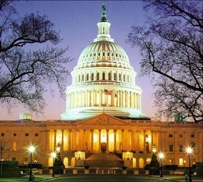
ACCP is on course to launch a Political Action Committee (PAC) as part of its ongoing strategic plan to increase the College’s advocacy capabilities and strengthen its position in Washington, DC.
The decision to establish an ACCP-PAC was made during a series of meetings of the ACCP Board of Regents and was supported by feedback from ACCP members who responded positively to the proposal.
Can We Really Compete with the Big Washington PACs?
The thought of participating in the high-dollar, high-stakes world of political fundraising is daunting. In 2008, as a candidate, President Obama raised and spent the almost incomprehensible sum of $730 million in his successful bid for the White House.1
Between the 24-hour news cycle and the use of sophisticated online fundraising techniques, candidates who make the headlines can raise vast sums of money almost instantaneously—Congressman Joe Wilson of South Carolina profited from his well-publicized “you lie!” outburst directed at the president during an address to a Joint Session of Congress to the tune of almost $1 million2 from sympathizers across the country who opposed the president’s health care reform proposals.
But politics is a fickle universe. Rep. Wilson’s outburst might have won him short-term approval among opponents of President Obama, but his congressional challenger, Democrat Rob Miller, raised a similar sum from those horrified at Rep. Wilson’s lack of decorum.3 Few of these donors will provide meaningful, ongoing financial support. Politicians with long-term ambitions cannot rely on splashy headlines for their financial base—they need the support of their political friends and allies. A $1 million dollar, nationwide, online fundraising blitz is a welcome bonus, but it is not considered sustainable—not in the way that dependable support from political allies is.
Contributions from the ACCP-PAC to pro-clinical pharmacy candidates for office reinforce our long-term commitment to improving access to clinical pharmacists’ services and the investment we are making in our advocacy program to influence policy and improve patient care.
Which Candidates Will the ACCP-PAC Support?
The ACCP-PAC, which is non-partisan, will support Republican, Democratic, or Independent candidates who have demonstrated their support for issues affecting clinical pharmacy practice. Contributions tend to be targeted toward candidates who sit on congressional committees with jurisdiction over health care issues (e.g., House Energy and Commerce; House Ways and Means; Senate Finance; Senate Health, Education, Labor and Pensions).
Who Can Contribute to the ACCP-PAC?
As a separate, segregated fund of ACCP, the PAC can only solicit contributions from ACCP members—our “restricted class.” The maximum contribution allowed by law is $5,000 per ACCP member per calendar year. Contributions are not deductible as charitable contributions for federal income tax purposes. The PAC can only accept personal funds—corporate contributions are prohibited by law.
Timeline
The ACCP Board of Regents has now approved an ACCP-PAC budget for 2010 and has installed a PAC Governing Council to provide oversight and strategic input into the operations of the ACCP-PAC, particularly in the areas of fundraising and decisions around which candidates to support. ACCP is working to register the PAC with the Federal Election Commission (FEC) and to establish accounting and reporting processes that will keep the ACCP-PAC compliant with FEC regulations. Further information will be made available during the summer in preparation for the formal launch of the PAC at the ACCP Annual Meeting in Austin in October.
For more information, contact John McGlew at (202) 621-1820 or [email protected].
References
- Source: Banking on becoming president/open secrets. Available here. Accessed June 2, 2010.
- Source: Politico Article—Wilson breaks $1 million. Available here. Accessed June 2, 2010.
- Source: Politico Article—Wilson breaks $1 million. Available here. Accessed June 2, 2010.
ACCP at the National Conference of State Legislators
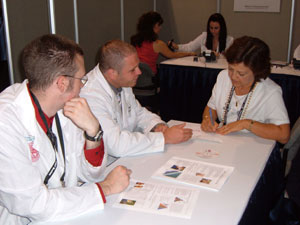
For more than a decade, ACCP, as part of the Alliance for Pharmaceutical Care, has participated in the Annual Legislative Summit of the National Conference of State Legislators (NCSL).
The Alliance for Pharmaceutical Care is a consortium of eight national pharmacy groups, working together to educate the public and policy-makers about the role of the pharmacist in improving patient outcomes.
NCSL is a bipartisan organization that serves the legislators and staffs of the nation’s 50 states, providing research, technical assistance, and opportunities for policy-makers to exchange ideas on the most pressing state issues.
The NCSL Legislative Summit brings together 5,000 legislators, legislative staffers, families, government officials, business representatives, union members, foundation representatives, and others interested in public policy to discuss issues including health care, the economy, transportation, education, human services, energy, and the environment.
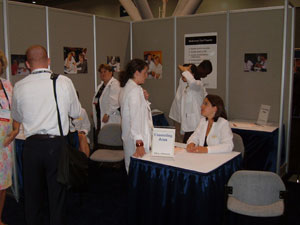
The centerpiece of the Alliance’s outreach is “Pharmacist Central,” an exhibit where meeting attendees can experience firsthand the wide range of patient care services that pharmacists provide, including health screenings, patient counseling, and medication reviews. Visitors to Pharmacist Central also gain insight into the valuable initiatives and programs using the medication expertise of pharmacists that increase access, reduce costs, and improve overall patient care and health care outcomes.
In previous years, patient care services available at Pharmacist Central included:
- Brown Bag Medication Review: In this area, participants are invited to share with pharmacists their current prescription use and discuss any potential interactions or recommendations based on current protocols.
-
Counseling Area: In the patient counseling area, patients will receive their cholesterol and diabetes screening results from a pharmacist, who will explain what they mean. In addition to the cholesterol/glucose results, pharmacists will consider the results of the patient’s other tests and provide patient-specific feedback on what the results may mean.
-
Cholesterol/Diabetes Screening: At this station, individuals will have a sample of blood taken (by fingerstick and capillary tube draw). Patients will undergo a panel of tests ranging from total cholesterol, LDL, and HDL to glucose concentrations. The results are available in 5 minutes and are available for pickup at the Counseling Area.
-
Body Fat Analysis Area: In this area, participants will receive an ultrasonic measurement of their biceps by the Futuro machine. The machine provides a printout of data such as the person’s body mass and fluid content.
-
Respiratory Area: In this area, pharmacists will be using the Satellite Spirometry System. The computerized spirometer measures complete flow-volume and time-volume date, together with comparative values.
-
Blood Pressure Area: Pharmacists will measure patients’ blood pressure.
-
Bone Density/Osteoporosis Measurement Area: Using the Sahara Heel Bone Ultrasonic Machine, pharmacists will screen patients for bone density. Patients must have stocking-free heels to undergo the screening.
-
Heartburn Awareness: In this area, pharmacists provide a brief evaluation to determine the applicability of OTC heartburn medication.
The Alliance member organizations are:
- American Association of Colleges of Pharmacy (AACP)
- American College of Clinical Pharmacy (ACCP)
- Academy of Managed Care Pharmacy (AMCP)
- American Pharmacists Association (APhA)
- American Society of Health-System Pharmacists (ASHP)
- International Association of Compounding Pharmacists (IACP)
- National Alliance of State Pharmacy Associations (NASPA)
- National Association of Chain Drug Stores (NACDS)
Call for Volunteers
This year’s NCSL Legislative Summit will be held July 26–28 in Louisville, Kentucky. We are calling on ACCP members in Kentucky to volunteer to staff the exhibit to help educate state legislators about the value pharmacists provide to patient care every day.
For more information, or to sign up as a volunteer, please visit the Alliance for Pharmaceutical Care Web site at http://www.allianceforpharmcare.com/index.html, or contact John McGlew at (202) 621-1820 or [email protected].