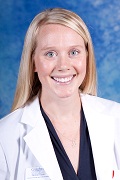
Editor's note: ACCP's Member Spotlight is a new, bimonthly ACCP Report series that serves to highlight and provide visibility to ACCP members with respect to their career paths, contributions, and experiences with ACCP. If you would like to nominate someone to be featured, visit the Web site at http://www.accp.com/membership/spotlight.aspx. Nominations are accepted on a continuous basis. Members who are selected will be asked to complete a biographical sketch and brief questionnaire for use in developing their member spotlight summary.
Dr. Nicole Gillespie is an assistant professor and clinical pharmacist at Creighton University School of Pharmacy and Health Professions in Omaha, Nebraska. Dr. Gillespie became interested in chronic disease management and lifestyle medicine while earning her Pharm.D. degree and completing her postgraduate training at Creighton. During her residency, she worked closely with the Creighton University Cardiovascular Risk Reduction Program and helped implement the university’s Diabetes Mellitus Risk Reduction Program. After completing her residency, she elected to stay on as faculty while working full-time with the Risk Reduction Programs at Creighton. Each service enrolls Creighton University employees with chronic disease states, including hypertension, hyperlipidemia, and diabetes. Each pharmacist-run service takes a multidisciplinary approach toward patient care using dieticians, physical therapists, exercise physiologists, and licensed mental health care practitioners. The Risk Reduction teams at Creighton also work closely with each participant’s physicians to optimize medication therapy, increase participant education, and incorporate lifestyle medicine to improve participant outcomes. She also serves as a preceptor for students at this unique clinical practice site. The faculty appointment gives her the opportunity to teach about what she loves—prevention—and expose students to the effect pharmacists can have on the health and quality of life of their patients. In addition to precepting students, Dr. Gillespie lectures in various didactic courses and works with the residents from the Creighton University Community Pharmacy Residency Program.
Nicole is active in local, state, and regional organizations. She is president-elect of the Midwest College of Clinical Pharmacy and an appointed member of the legislative committee for the Nebraska Pharmacists Association. She was awarded Distinguished Young Pharmacist of Nebraska by the Nebraska Pharmacists Association and Pharmacists Mutual, and she received the Governor’s Point of Light Award for her group volunteer work in the community.
Dr. Gillespie chose the pharmacy profession, specifically preventive pharmacy, because she believes there is a void in this type of care in the current health care system. She believes that health care has become increasingly effective at treating acute problems, but less so at avoiding these problems altogether, and that clinical pharmacists are armed with the tools necessary to bridge this gap. They are experts in optimizing chronic disease medication regimens, capable of monitoring, assessing efficacy, and increasing patient education and medication adherence. With the help of additional lifestyle medicine training, pharmacists can be extremely effective at decreasing chronic disease risk and improving patient outcomes, including quality of life. As a result, they can make a significant impact on preventing costly hospital and emergency department visits, which are of paramount importance in the state of our current health care system.
The obesity epidemic, as well as the increasing incidence of chronic disease in the pediatric population, has been a big influence on Dr. Gillespie’s career, and she believes that as health care providers, we need to focus more on improving in this area for our patients. Moreover, together with obesity and chronic disease comes decreased quality of life. If the obesity and chronic disease trends continue to move in the current direction, there is a gloomy forecast for our future. One of her career goals is to seek out solutions to help patients take control of their health. One individual who has been extremely influential on Dr. Gillespie’s career is her mentor and colleague Dr. Thomas L. Lenz, Pharm.D., M.A., FACLM. Dr. Lenz has been a proponent of lifestyle medicine in pharmacy practice for years. He wrote the book Lifestyle Modifications in Pharmacotherapy, started an elective lifestyle modifications course for pharmacy students at Creighton, conceived and developed the Cardiovascular Risk Reduction Program, and continues to advocate for additional lifestyle-related education to health care professionals and students.
Dr. Gillespie believes that ACCP is, in many ways, an excellent venue to foster ideas and promote the profession of pharmacy. The mission and philosophy of the organization clearly indicate that the advocacy for the advancement of human health and expansion of pharmacy practice are among the reasons ACCP exists. This community of advocacy is extremely important in shaping the future of our profession. Furthermore, being a member of ACCP has afforded her the opportunity to take part in this community and have a voice in its advocacy endeavors. She is grateful for the networking, idea sharing, and continuing education ACCP provides and hopes to give back to the organization by continuing to further the risk reduction programs at Creighton and by encouraging involvement to her colleagues and students.