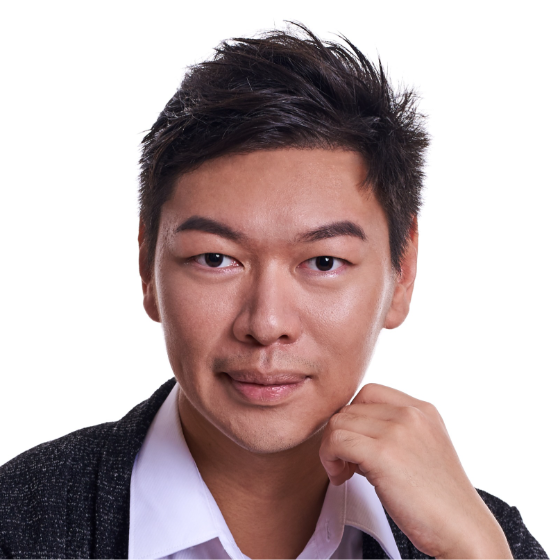
 Tai
TaiBik-Wai Bilvick Tai, Pharm.D., BCGP, AE-C, is an academic pharmacist at the School of Pharmacy, Faculty of Medicine, Chinese University of Hong Kong (CUHK). He also serves as an honorary pharmacist at Prince of Wales Hospital and CUHK Medical Center. Tai earned his Pharm.D. degree at the University of Maryland, Baltimore. After graduation, he completed a 2-year postdoctoral fellowship in health outcomes research at Western University of Health Sciences (WesternU), Pomona, California. During his fellowship, Tai gained broad exposure to various facets of pharmacy academia while dedicating most of his time to research in health-related quality of life, medication adherence and wastage, pharmacoeconomics, collaborative pharmacy practice, and honing his skills in survey development together with validation and statistical analysis. His interest in geriatric pharmacy developed through one of his research projects examining the impact of pharmacists on understanding medication use in the older adult population. Tai also lectured Pharm.D. students on medication adherence, supporting them in health outcomes research during advanced pharmacy practice experiences (APPEs), and assessing activities such as objective structured clinical examinations, interprofessional education discussions, health screenings, and journal club presentations.
In Tai’s current position, he teaches geriatric pharmacotherapy topics with a focus on chronic disease management as well as pharmacy practice topics such as the use of medical devices and special dosage forms. He also serves as a preceptor of a geriatrics clinical clerkship guiding final-year pharmacy students. Passionate about mentorship, he supports his students throughout their academic journey, fostering strong teacher-student relationships by being approachable and responsive to students’ needs. Tai also encourages his students to apply the concept of health literacy when serving their patients, especially populations like older adults who may have increased risk of low health literacy. His research focuses primarily on understanding and addressing real-world medication use problems in the older adult population. Beyond teaching students, Tai conducts training for hospital pharmacists and pharmaceutical industry staff in Hong Kong. Tai enjoys his interaction with students and colleagues from various backgrounds while contributing toward shaping and advancing the pharmacy profession.
Despite relocating to Hong Kong, Tai remains committed to maintaining ties with American pharmacy organizations. ACCP, in particular, has been instrumental in his professional development, providing a decade’s worth of opportunities that are aligned with his academic career goals. In addition to attending the College’s Annual Meetings, he has served as an abstract reviewer for the meetings since 2017. In addition, he has served as a reviewer for student CVs, the Outstanding Student Chapter Award, and the Annual Meeting Resident/Fellow Travel awards. Tai has also extended his role by serving on multiple committees in the College, including the Credentials: Membership Committee from 2016 to 2018 and the Annual Meeting Program Committee from 2018 to 2020. He has found a great sense of satisfaction in giving back to the pharmacy profession while enriching his network with pharmacists and ACCP members from all over the world.
Tai gratefully acknowledges 2 mentors who played pivotal roles in shaping his career and practice. Dr Robert Beardsley, now retired and honored as professor emeritus at Tai’s alma mater, was his first mentor during his research APPE. Beardsley exemplified professionalism and demonstrated how to integrate its core principles into Tai’s future training and career. Dr Anandi Law, Tai’s fellowship director at WesternU, provided invaluable guidance and support during his challenging transition from student to academician-in-training. Law facilitated opportunities for Tai to interact with seasoned pharmacy educators to enrich his understanding of different pedagogical approaches in didactic and experiential learning settings. Later in his fellowship, Law empowered him by granting him flexibility in developing his own research project.
Tai’s most significant advocacy for pharmacists lies in positioning pharmacy professionals as essential health care providers and engaging with key stakeholders in the health system. In his opinion, pharmacists and pharmacy students should actively participate in pharmacy organizations for networking, keep abreast of health care news and policies, leverage social media to highlight what they can contribute in health care, and engage in research to build evidence-based support for advocacy. Tai personally drives change by cultivating an inclusive environment where diverse perspectives can be solicited and valued, ensuring the voice of all involved parties is heard. This enthusiasm began with one of his fellowship research projects, which centered on rising health care expenditures and the global shift toward patient-centered care. He and his collaborators examined the number of health economic analyses conducted from the patient perspective and found a dearth of such studies. With the prominence of patient cost sharing in health care, his team advocated for patient-centric economic analyses through the dissemination of their findings, urging that more such studies be conducted.
Tai’s first passion was not pharmacy, but Japanese culture. He started learning the language at age 12 and thought of majoring in Japanese studies and working in Japan one day, but life had a different plan for him. After discovering the pharmacy profession, he was fascinated by how much a pharmacist can and should do in patient care. Coupled with the opportunity to study abroad in the United States, he chose a different route from his first passion and embraced a new direction. Luckily for Tai, he fulfilled his dream of working in Japan by leading a study tour through an exchange program with a pharmacy school there.
Tai’s advice to others is from a book he recently came across titled Life Is 10% What Happens to You and 90% How You React by Charles R. Swindoll. He feels the name of the book perfectly captures his outlook on life. At times, we encounter obstacles like study- or work-related stress and health system barriers in advancing the roles of the pharmacist, but our life is not defined by the number of obstacles we face but rather how we respond to them. Even in tough times, Tai encourages resilience, adaptability, and a positive mindset in our personal and professional journey.