In 1996, a memorandum signed by the Indian Health Service (IHS) director established IHS pharmacists as primary care providers, allowing them to have prescriptive authority. This led to the development of the IHS principal pharmacy consultant, who primarily focuses on ensuring a uniform level of competency among pharmacists providing advanced care. Within the IHS framework, pharmacists with advanced training in pharmaceutical sciences, pharmacology, and clinical pharmacy are officially recognized as clinical pharmacists. Clinical pharmacists shoulder many responsibilities, encompassing the management of medication therapy through direct patient assessment, evaluation of patient responses to medication therapy, communication and documentation of patient findings, provision of recommendations to care team members, and implementation and monitoring of pharmacotherapeutic care plans. Moreover, clinical pharmacists skillfully serve in primary care roles or as intermittent providers for patients requiring intensive medication therapy. Within the IHS residency programs, residents are provided the opportunity to serve as clinical pharmacists and to learn in a progressive practice setting while being immersed in the culture of the tribe they are serving. Below, hear from three IHS residents about the unique experiences they had during their postgraduate year one (PGY1) pharmacy residencies.
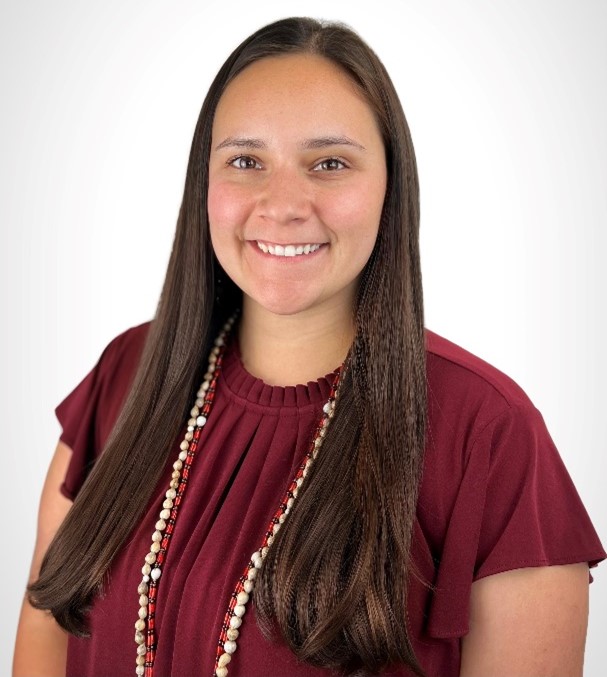 Dr. Destiny Daniel, pictured left, completed her PGY1 pharmacy residency in Tahlequah, Oklahoma, at the Cherokee Nation W.W. Hastings Hospital and Outpatient Health Center. This is the largest tribal facility in Oklahoma, performing over 165,000 outpatient visits and 2500 admissions per year. Daniel stated:
Residency has provided me with an opportunity to refine clinical knowledge in both inpatient and outpatient settings. I gained experience in Intensive Diabetes Management Services (IDMS), which is a pharmacist-led clinic in the Cherokee Nation designed to help patients with uncontrolled diabetes meet glycemic goals and decrease risk of complications. My residency research project directly supported the efforts of the pharmacists within IDMS to help patients reduce A1C levels and achieve glycemic control through the use of continuous glucose monitoring. Overall, residency has helped me develop time management skills for completing projects while also providing opportunities for growth in direct patient care experiences.
The most memorable aspect of my residency has been my involvement with the local community. The Oklahoma State University College of Osteopathic Medicine at Cherokee Nation has a student-led “Walk with a Doc” chapter. During these events, a health care provider volunteers their time to discuss relevant health topics before going on a 1-mile walk with community members. Leading these sessions as a pharmacist has been immensely rewarding. It has allowed me to engage with the community, covering crucial topics like proper medication disposal, naloxone, and medication adherence, all while promoting physical activity and wellness. Furthermore, these experiences have facilitated connections with community members, medical students, and providers, enabling discussions about the diverse roles pharmacists play in healthcare settings.
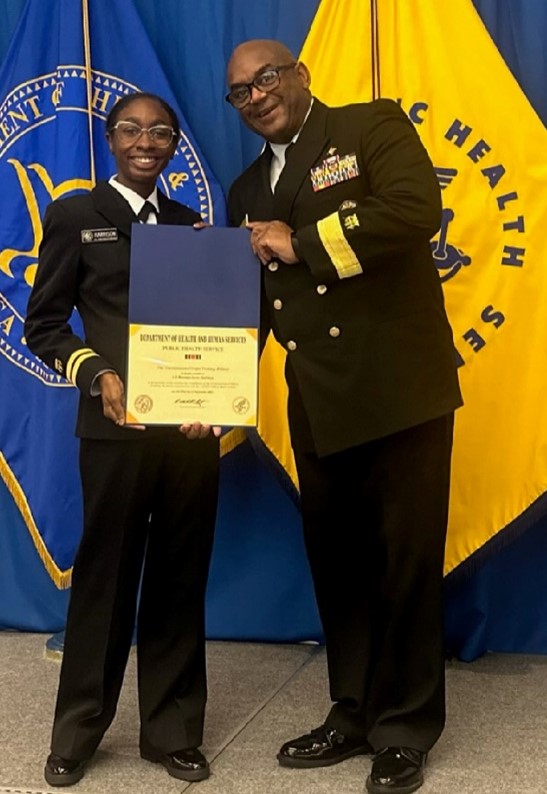 LT Breonna Harrison, pictured left with RDML Cedric Guyton, completed her PGY1 pharmacy residency in Whiteriver, Arizona, at the Whiteriver Indian Hospital. This facility provides services to over 17,000 Native Americans throughout the White Mountains of Arizona. The Whiteriver pharmacy department has five divisions: outpatient, inpatient, specialty, ED, and Cibecue (remote satellite clinic). Pharmacists are integrated into most areas of medical practice, including family medicine, internal medicine, and the women’s clinic. Harrison provided insight into her residency experience, stating:
I feel like I have gained a plethora of clinical knowledge in a variety of different areas such as hypertension, dyslipidemia, tobacco cessation, diabetes, asthma, chronic obstructive pulmonary disease, heart failure, thyroid disorder, chronic kidney disease, opioid use disorder, alcohol use disorder, cirrhosis, and sexually transmitted infections. My residency provides me with a lot of autonomy in our pharmacy-run clinics. My most memorable experience as a resident was vaccinating children at a homeless shelter on the reservation.
Whiteriver Indian Hospital offers community outreach and the patient-centered medical home (PCMH) clinic. On my community outreach rotation, I have vaccinated teens and children at their schools, immunized at-risk children, and cared for patients in their homes. The PCMH clinic at Whiteriver Indian Hospital provides chronic disease management to patients referred by providers to reach clinical and personal health goals. I have conducted medication review and reconciliation, counseling, adjusting, and titrating of medications for patients with various disease states. I have also provided assessment and treatment of minor acute conditions, such as acute uncomplicated cystitis, seasonal allergies, strep pharyngitis, and otitis externa and otitis media.
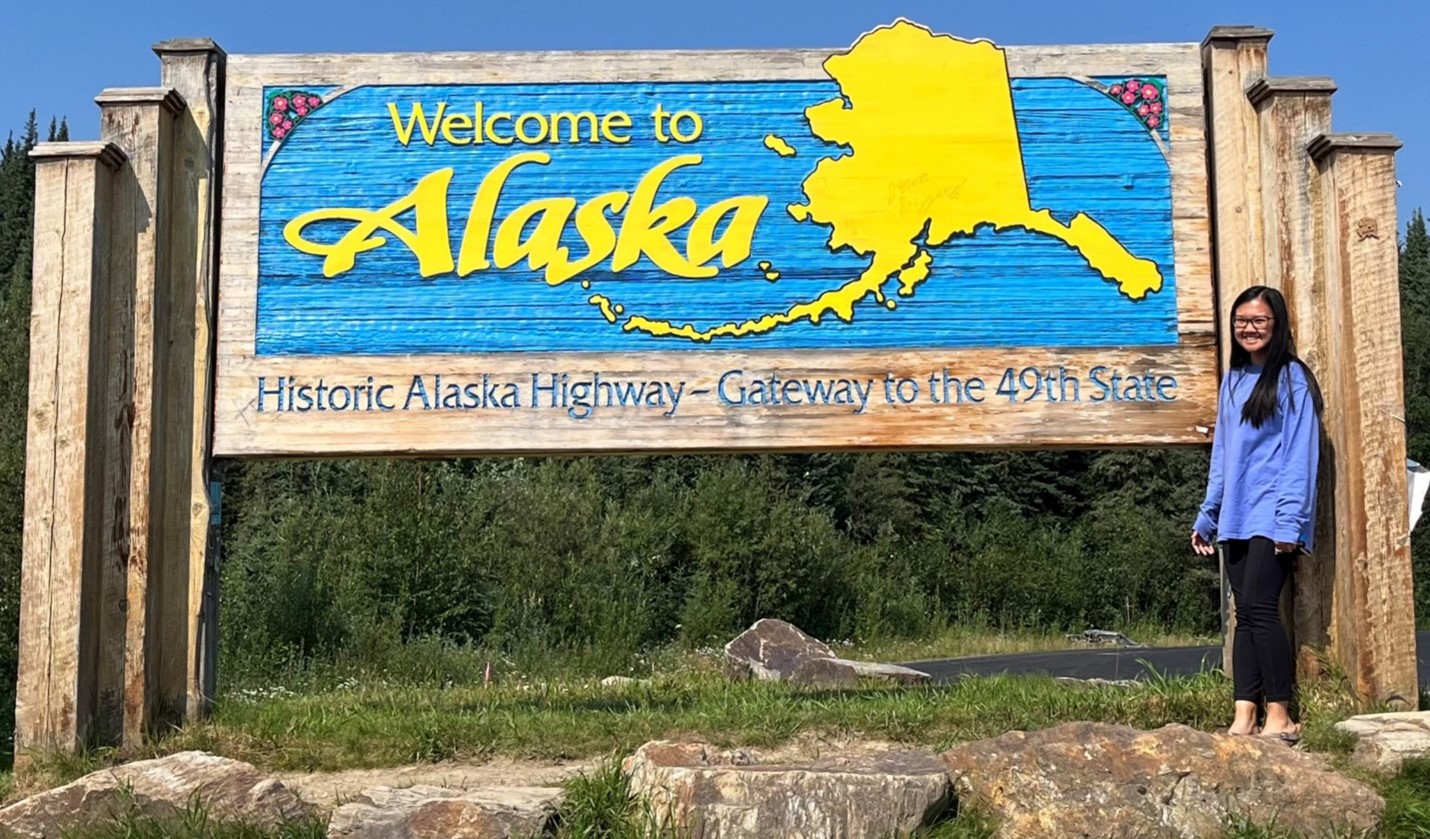
Dr. Minnie Ng, pictured above, completed her PGY1 pharmacy residency in Anchorage, Alaska, at the Alaska Native Medical Center. This is a nonprofit health care organization that provides medical services to more than 173,000 Alaska Native and American Indian people. Ng provided a closer look into her residency experience, stating:
IHS is different in that we take care of a very specific and underserved population of American Indians and Alaska Natives. Throughout my year, it was interesting to learn the higher likelihood of certain disease states in Native Americans as opposed to others. It is also important to realize that cultural competency is always a priority when providing care to this population. I enjoyed the various opportunities to work with providers, actively participate in codes, and make close relationships with our patients.
The Alaska Native Medical Center is a 184-bed hospital and is the largest hospital within the IHS. During this residency, I gained experience in both inpatient and outpatient areas. My experience ranged from oncology/infusion and diabetes to critical care and emergency medicine. With the Centers for Disease Control and Prevention on campus, I also get to collaborate on a project for public health. This residency program is unique in that the opportunities are endless, and the experiences gained are invaluable.
The pharmacy residents within the IHS pharmacy residency program experience autonomy while working in collaboration with the other health care team members, reflecting an interdisciplinary approach to patient care within the IHS. The resultant combined effect contributes to enhanced patient outcomes across all domains of direct patient care provided at public health facilities within the IHS and supports the IHS mission to raise the physical, mental, social, and spiritual health of American Indians and Alaska Natives to the highest level.
Submitted by: LCDR Katherine Vodovoz, Pharm.D., BCACP, CDCES, NCPS; and LCDR Leah (Weiss) Satlak, Pharm.D., BCPS