Program Overview
The PGY1 pharmacy residency program at UTMB Health is designed to prepare pharmacists for impactful roles in pharmacy practice. By integrating advanced clinical practice, teaching, and research opportunities, residents develop the skills necessary to provide exceptional patient care and contribute to the advancement of pharmacy practice.
This program allows residents to pursue individual professional interests through a diverse set of elective rotations, an opportunity to obtain a teaching certificate, and professional development. Graduates of the program are well positioned for careers in PGY2 specialties of their areas of interest or decentralized pharmacist roles.
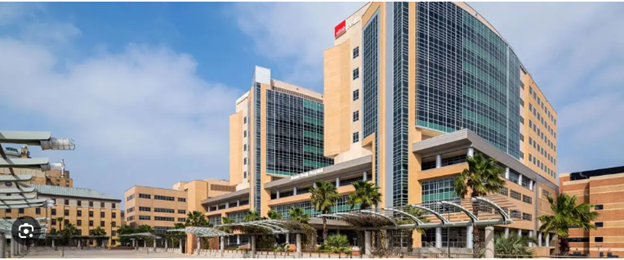
UTMB Health is a level 1 trauma center and a level 4 neonatal ICU. The health system has over 1000 beds spread over 4 campuses. Residents in the program spend most of their time in the academic medical center in Galveston, Texas, but can also have rotations in the community campuses in League City and Clear Lake, Texas. In addition, residents take care of a diverse patient population including people who are incarcerated in the Texas Department of Corrections located in Galveston.
Key Features of the Residency
Listed below are examples to consider when contemplating what you can include in Key Features:
- Customized Learning Experience
Residents can tailor their residency year through selecting 7 elective rotations and the ability to repeat any rotation in their area of interest.
- Clinical Skills Development
“Residents are trained to manage patients with complex infectious diseases, critically ill individuals, and those with chronic conditions such as diabetes and hypertension. They also actively contribute to the care of underserved populations, including incarcerated patients.”
Residents staff every third weekend. Staffing responsibilities rotate between order entry pharmacy responsibilities and managing the pharmacy consults (vancomycin and warfarin) for the Galveston campus. Residents are on call once every 6 weeks. These experiences give residents the ability to practice answering complex questions and better understand the workflow of the pharmacy.
Residents participate in monthly leadership/professional development meetings as part of their longitudinal management rotation. They also participate and present in the P&T committee and complete a major research project and medication use evaluation.
Residents can precept pharmacy students from the local colleges of pharmacy, as well as LAPPE students. In addition, residents have the opportunity to deliver lectures to the physician assistant students and in-services to multidisciplinary teams on rotations.
Residents complete a medication use evaluation and major research project during their residency year. Residents choose from a variety of project ideas during orientation. The major research project is presented as a platform presentation at a Texas Society of Health-System Pharmacists meeting (Alcalde), and the medication use evaluation is presented at the Vizient conference at Midyear as a poster.
- Presentation Opportunities
Residents have the opportunity to present formal journal clubs and case presentations throughout the year. In addition, residents deliver a continuing education presentation during the residency year. Informal presentations may include discussions on various topics and patient education sessions.
- Interdisciplinary Collaboration
Residents in the program round with multidisciplinary teams and work with team members across various departments throughout the residency year.
- Professional Development Support
At the start of the year, residents choose a mentor to provide guidance and support throughout their training. Residents also participate in monthly leadership/professional development meetings throughout the year. These meetings focus on different leadership topics including leadership styles and project management tips.
Current Resident Project Examples
- Impact of linezolid versus vancomycin and clindamycin for necrotizing fasciitis
- Comparison of 2- and 1-drug antimicrobial regimens for the treatment of acute appendicitis in pediatric patients
- Analyzing belatacept dosing and outcomes in kidney transplant recipients with CMV or BK viremia
- Impact of clinical pharmacy models on hemoglobin A1c and BMI of primary care patients with diabetes
- Evaluation of rapid infusion bevacizumab versus standard infusion bevacizumab in patients with solid tumor malignancies at an academic medical center
Reflections from Current Resident
Vida Joy Ordonez DeLorenzo
- Pharmacy School: University of Washington School of Pharmacy
- PGY1 Health System Pharmacy Administration and Leadership
- Clinical Interest Areas:
- Cardiology, oncology
UTMB easily became one of my top choices for several reasons. Upon researching and connecting with programs at ASHP Midyear 2023, I was looking for a program where I could trust the preceptors to support me every step of the way and provide valuable opportunities to develop my leadership skills in pharmacy. Upon meeting the residents at that time, their enthusiasm and testimonials of the program highlighted the exceptional preceptors and strong pharmacy culture, which inspired me to become part of the program. Upon starting the residency, I quickly realized their praise was well deserved. This supportive and encouraging environment has allowed me to grow and refine my skills and confidence as a new practitioner.
Another key factor in my decision to choose UTMB was that this year marks the launch of UTMB’s Health System Pharmacy Administration and Leadership (HSPAL) program. Becoming the inaugural HSPAL resident has been an exciting and unique opportunity, allowing me to help pave the way for future UTMB HSPAL residents. The program is unique because it incorporates administrative experiences during the first year, which have been both rewarding and enjoyable. These experiences have established me as a valued member of the leadership team and further fueled my excitement for the opportunities awaiting me in my second year.
Finally, UTMB offers unique learning opportunities, such as caring for patients within the Texas Department of Criminal Justice and serving populations that are medically underserved. Caring for these patient populations provides residents with extensive experience in navigating medication access programs and developing practical solutions to help patients receive the care they need. This combination of professional support, unique patient populations, and impactful learning experiences has made my time at UTMB truly invaluable.
After residency, I aspire to become a manager of ambulatory pharmacy operations, where I can lead efforts to expand outpatient clinical pharmacy services. I am deeply passionate about providing patients with comprehensive care between visits with their medical providers to optimize health outcomes. Clinical pharmacists play a pivotal role in patient care—whether by identifying appropriate medication alternatives, preventing and managing medication-related adverse events, or navigating medication access challenges. By addressing these critical aspects of care, pharmacists can help ensure that patients with chronic conditions receive the support they need to achieve better health outcomes. My goals are to highlight the vital contributions that clinical pharmacists make through their medication expertise and to demonstrate their value in delivering holistic care alongside other health care professionals.
Advice for Future Residents!
My advice for prospective pharmacy residency candidates is to find a program that aligns with their goals and values. For some, this might require taking the time to reflect on what these goals truly are, but once there is clarity, selecting the right program becomes much easier. “Best fit” looks different for everyone and can include various factors, such as specific rotations and learning opportunities, location, preceptors, and project experiences. I encourage candidates to connect with current residents and program coordinators and directors to gain deeper insights into programs. Ask about recent changes to the program and how resident feedback is received and incorporated.
Once your residency begins, embrace the journey and savor the experience. Ask questions freely, and approach every day with a mindset of curiosity and growth. Take note of interesting patient cases because these experiences will serve as valuable references as you establish your practice. Don’t shy away from gaps in your knowledge; instead, view them as opportunities to do research and expand your expertise.
To succeed during residency, it’s essential to adopt a system for staying organized and managing your tasks effectively. Whether it’s using a physical planner, creating to-do lists, setting up email organization rules in Outlook, or relying on sticky notes, find what works best for you and implement it early. Remember, failing to plan is planning to fail—organization is key to navigating the challenges of residency successfully.
Contact Information
Program Director/Contact Name: R. Scott Ferren, Pharm.D., BCIDP
Email: [email protected]
Website: https://www.utmb.edu/rxhome/residency-program/about-pgy1-pharmacy-residency-program