
Biography
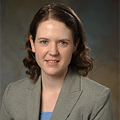
Jessica Reid, Pharm.D., is a clinical assistant professor with the University of Florida (UF) College of Pharmacy at the Jacksonville campus. She received her Pharm.D. degree at Virginia Commonwealth University (VCU) before completing a postdoctoral fellowship in clinical research and pharmaceutical industry at the East Coast Institute for Research. Reid’s research interests include diabetes, heart failure, chronic kidney disease, hyperuricemia, and melanoma, where she has served as a sub-investigator on many clinical trials.
Why did you choose the fellowship route over residency?
When I entered pharmacy school at VCU, I wanted to do research in medicinal chemistry, and I completed research in the Pharm.D./Ph.D. summer fellowship program with Dr. Keith Ellis. I enjoyed the experience and learned a lot; however, I realized that bench lab work was not exactly what I was looking for in a career. I had worked in community pharmacy for several years and missed the patient interaction. I decided that a clinical research path was better suited for me because it connected the discovery of research with patient care. On my fourth-year rotations, my rotation in clinical research was more appealing than the rotations in health-system pharmacy, which led me to heavily consider fellowship over residency. I felt I could make more of a global impact working on novel medications on a large scale, and I enjoyed working in that environment. To me, a fellowship would provide the postdoctoral training necessary to be successful in the field of clinical research. I think fellowships and residencies each have their own benefits and give you something unique and different. Residencies may still be a great option for those interested in research because most residents complete a research project during their training as well.
What was your application process like for fellowship?
I went through the personnel placement service (PPS) at Midyear during my fourth year of pharmacy school. When the PPS opened in late September/early October, I had all of my materials gathered for submission; my application, CV, letters of intent, and recommendation letters were ready to apply. Because the fellowship interviews occur at the Midyear meeting in the PPS, some fellowship programs asked for a phone call interview before Midyear, which was considered their first round; others scheduled a time to interview me at Midyear. I completed several phone and first-round interviews at the PPS and then went to some second-round interviews as well. After the second-round interviews, most programs held a reception during the evenings of the Midyear meeting, which I attended, where I met more of the individuals who would be part of the programs. Typically, an on-site interview would occur after that; however, I was offered a position shortly after the end of the Midyear meeting, which I accepted; hence, I did not do on-site interviews with any program.
Can you tell us more about your fellowship experience?
After graduating from VCU, I immediately started at the East Coast Institute for Research in Florida as a postdoctoral fellow in clinical research and pharmaceutical industry. We had research studies at five locations throughout north Florida and Georgia. I learned the duties and tasks of each member of the team, from the research assistant role to the clinical research coordinator role and eventually the site manager role. My duties were related to reviewing patient charts, recruiting patients for the clinical studies we were involved in, and facilitating some of the patient visits. I was available to answer medication-related questions for patients and provide counseling, when needed. I also worked on our CTMS (clinical trial management system), negotiated budgets with pharmaceutical companies, and worked on investigator-initiated studies. Contract execution and preparing all regulatory documents to be submitted to the IRB were other key parts of the process that I worked on with the compliance manager. By the end of my fellowship, I really got to see and be involved in everything in the startup process of a clinical study.
As a postdoc obtaining fellowship training, what did your role consist of day to day?
In addition to working on the clinical studies and doing the day-to-day patient visits, pharmacist support, and patient recruiting, I worked with other health care providers on manuscripts and paper writing. I often met with medical science liaisons (MSLs) who worked for many pharmaceutical companies to engage in scientific discussion regarding guideline updates or updates in a specific pipeline. Our research institute offered an experience different from that at a single pharmaceutical company, given that I could meet with MSLs from several companies regarding several disease states. I worked on investigator-initiated trials, where we would create and develop an idea to study, submit it to a company, and then develop a protocol. These differ from the sponsor-initiated studies because we were collecting our own data as well as writing our own manuscripts and publications. During the fellowship, I was also in the teaching certificate program at UF, teaching in its skills lab once a week and teaching at the NOVA Southeastern University PA program in its pharmacology course in addition to presenting study information to our offices as lunch and learns.
What would you consider has been one of the most rewarding moments of your career so far?
My interactions with patients have been the most rewarding. Once patients came into our office for a study and were working with the clinical research coordinators, they began to see improvements in their health, which was extremely rewarding and fulfilling. In research, patients do not pay for their visits or medications; in fact, they are compensated for their time and travel. Most of the studies I worked on offered compensation in addition to diabetic testing supplies, lancets, new glucometers, etc., and sometimes, if the clinical trial required them to take certain other medications concomitantly, those would be covered too. So, as you can imagine, this is great for a lot of patients who may be having difficulty affording their medications and offers the opportunity to try a new medication in some instances. Even patients placed on placebo typically did well because of increased follow-up, so seeing patients progress through a study was really nice.
Do you have any advice for students looking to obtain a fellowship?
If you can find an industry-related rotation as an elective during your fourth year that is feasible, I highly recommend doing so. I did this during my fourth year, and it was a great experience that really taught me quite a bit about the different procedures and roles in industry. Work with your OEE to try to organize this experience before Midyear. If you cannot do an industry-related rotation or experience before Midyear, try to shadow someone in industry, even if it is virtually (this might offer even more opportunity). Shadowing or completing the rotations allows you to ensure it is the right fit and gives you many experiences to speak in interviews. Also, if you can get involved in research, whether you are considering residency or fellowship, it will help you stand out and prepare for those roles.
If you have any questions about the information presented here, feel free to e-mail Danielle Holdren at [email protected] or Jessica Reid at [email protected].
---------------------------------------------------------------------------------------------------------------------
Pictured: Kathryn Connor
Interviewee: Dr. Kathryn Connor
Written by: Michelle Brown, Pharm.D. Candidate, Class of 2021, Wegmans School of Pharmacy, St. John Fisher College
Biography
Kathryn Connor, Pharm.D., is an associate professor of pharmacy practice at St. John Fisher College Wegmans School of Pharmacy in Rochester, New York, and a board-certified pharmacotherapy pharmacist and formerly certified nutrition support pharmacist. She graduated from Wayne State University in Detroit, Michigan, where she earned her Pharm.D. degree. After graduation, Connor completed her PGY1 residency at Johns Hopkins Hospital, followed by a PGY2 critical care specialty residency at Regional Medical Center/University of Tennessee Health Science Center. Connor is the American College of Clinical Pharmacy College of Pharmacy faculty liaison and the president-elect for the New York State chapter of ACCP.
1. In January of this 2020, you began your term as president-elect of the New York State chapter of ACCP. What excites you the most about your new position?
I am most excited about incorporating my knowledge of and experience with ACCP [Connor has been a member of ACCP since she was in pharmacy school] and trying to integrate the national organization with the state chapter. There will also be a huge role for pharmacists statewide in managing and administering a COVID vaccine, once developed. I also look forward to continuing to support and involve students and residents in the organization as our future colleagues; meeting the dedicated, passionate leaders and members of this and other organizations; and integrating with other state and regional pharmacy organizations.
2. You served as one of the judges for the Best Poster Awards for the 2019 ACCP Annual Meeting in New York. What advice do you have for students regarding developing successful posters for presentations?
I want them to know that their efforts and interest are important, and we see that, and that they are valued research colleagues, even as they are learning. It is important to be passionate about research projects, and this comes through in their presentations. Also, practice, make sure everyone involved in the poster has a chance to review it, and make your “story” and take-home message clear. Finally, be prepared to answer questions.
3. You specialize in critical care pharmacy. How, if at all, has the current pandemic changed practice for you?
COVID-19 has been an evolving situation in the hospital, with a great deal of ongoing learning and effort in managing it, but I think the biggest change has been the limited visiting hours at the hospital, which has affected patient care in many ways: more phone calls and virtual communication and patients suffering alone have been agonizing for families. At first, almost no visitors [were allowed]; but now, there are limited visitors, so this a huge change for our SICU service, which had no visiting hours pre-pandemic (families were always allowed and encouraged to be at a patient’s bedside). I like talking to families and having them on rounds, and they are indispensable partners in our patients’ care.
4. What advice do you have for students who may be doing a critical care rotation or for students on rotation in general?
I am not sure how popular this advice will be, but it is important to get out of your comfort zone for personal and professional growth. Students are learners, with a positive, meaningful impact on patient care; patients are dynamic. In general, eventually make sure you have an independent assessment and plan for patients that is based on evidence or a logical rationale because this is where pharmacists add value (in educating and thinking for themselves, as well as knowing the literature really well).
5. What do you find most challenging when teaching students about critical care pharmacy?
Most challenging for me are the lack of guidelines and large randomized controlled trials because this population of patients is difficult to study. The ICU is an intense, but also fiercely collaborative and autonomous environment. There is a significant emotional component. Students see patients near death every day and sometimes see patients they follow die unexpectedly. It is also difficult to explain what a meaningful and positive impact students can have on patient care, even as they are learning. Patients benefit from a fresh set of eyes and ears on them and from students generating questions and making valuable interventions as they learn to treat patients.
6. What sources do you use to keep up to date on the most current data?
My organization offers many teaching sessions (Ces, journal clubs, case discussions), which I attend as often as possible. When preparing to teach, I try to align my research with lessons to students, residents, and colleagues at the bedside. I also use other sources such as videos, podcasts, and blogs about critical care.
7. What surprised you the most about critical care pharmacy?
I was most surprised by how important it is to have strong, collaborative teams. You cannot work in a silo, you cannot be on an island with just your medication knowledge and experience, and you are expected to know at least a little bit about everything. It not only makes the work we do more fun, predictable, and efficient, but also protects us as health care professionals from burnout and the emotional impact of such a stressful environment. I have also seen so much evolution in critical care medicine in my career already, and I can’t wait to see what will happen in the next 10–15 years.
8. What advice do you have for students for making the most of their pharmacy school experience?
Take risks, prepare but try to be fearless, and get outside your comfort zone routinely. Enjoy these years – it is such a special experience – and make friends as much as possible. Befriend and collaborate with students in other classes and programs. Work hard – your life after you graduate will be worth it, and you will be an extremely well-trained health care professional in a very dynamic and fulfilling profession.